

To commemorate the 30th anniversary of the first reported cases of AIDS, the NICHD highlights some key moments in pediatric, adolescent, and maternal AIDS research
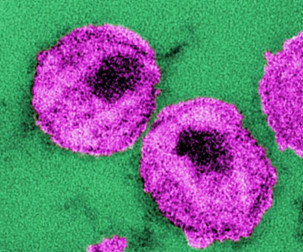
As scientific understanding of the disease and its mechanisms continues to advance, we can find reasons to hope. Where once there were no treatment options, we now have multiple regimens that can help to manage the disease. Where once the disease spread seemingly without boundaries, we now have ways to prevent that spread. Researchers, health care providers, and communities around the world remain dedicated to preventing, treating, managing, and even curing AIDS.
During the last 30 years, the NICHD and its researchers have played important roles in improving the outlook for children, adolescents, women, and mothers who have or are at risk for AIDS. While keeping in mind the many challenges that remain, the NICHD highlights some of the key moments in the history of AIDS/HIV, specifically related to children, adolescents, women, and mothers. No single list of a 30-year span can be all inclusive, but these highlights provide a good overall picture of how far we've come, and how far we still have to go.
Select a period below to view the research highlights for that timeframe.
1981 to 1985
1981
The Centers for Disease Control and Prevention (CDC) publishes the first reports of AIDS, although identified by another name, in the Morbidity and Mortality Weekly Report ( MMWR). The reports describe cases of Pneumocystis pneumonia and Kaposi's sarcoma in 41 otherwise healthy homosexual men. The reports appear in the June MMWR and July MMWR.
1982
Three notable reports appear in the MMWR. The first describes cases of Pneumocystis pneumonia among patients with hemophilia A . The second details four infants with unexplained cellular immunodeficiency and opportunistic infections similar to those reported in adults. Of the four infants, three were born to mothers with then-identified risk factors for AIDS, while the other received a blood transfusion from a patient with AIDS. The authors note that "transmission of an 'AIDS agent' from mother to child, either in utero or shortly after birth, could account for the early onset of immunodeficiency in these infants." The third describes similar cases of immunodeficiency in patients with hemophilia A, including a 10-year-old boy.
1983
- The first report of AIDS in infants born to Haitian mothers appears in a letter to New England Journal of Medicine.
- Two separate articles in the Journal of the American Medical Association reports of AIDS in children in New York and New Jersey whose parents had recognized risks factors for AIDS. At the time, those risk factors included drug addiction and sexual promiscuity.
1984
- Researchers report cases of apparent mother-to-child transmission of AIDS among children of Haitian parents in the New England Journal of Medicine.
- Dr. Luc Montagnier and colleagues and Dr. Robert Gallo identify the virus that causes AIDS . Initially, they call the virus Lymphadenopathy-Associated Virus (LAV) or Human T-Lymphotropic Virus III (HTLV-III); later it becomes known as Human Immunodeficiency Virus Type 1 (HIV-1).
1985
- The Lancet publishes the first report of HIV transmitted from mother to child through breastfeeding . The report describes a mother who is infected with HIV from a blood transfusion following a cesarean delivery. She breastfeeds her infant, and the child subsequently is found to have HIV infection. The journal also publishes the first description of the AIDS virus isolated from the breast milk of three healthy, HIV-infected women.
- In MMWR, the CDC issues the first recommendations for counseling women in the United States at increased risk of HIV infection who are pregnant or might become pregnant. Recommendations include: when health care workers should offer to test women for HIV; suggestions to consider delaying pregnancy until officials understand more about HIV transmission during pregnancy and near birth; not breastfeeding if HIV infected; and having the child evaluated for infection.
1986 to 1990
1986
The NICHDestablishes the Mother and Infants Cohort Study (MICS) at five study sites in the New York boroughs of Brooklyn and the Bronx, which had nearly one-half of all perinatally acquired AIDS cases at the time. The study is a collaboration between the NICHD and the National Cancer Institute (NCI). Researchers aim to evaluate factors associated with mother-to-child HIV transmission, how HIV affects pregnancy and pregnancy outcomes, how pregnancy alters the progression of HIV infection, and how it affects infant growth and neurodevelopment.
1987
The U.S. Food and Drug Administration (FDA) approves AZT as the first antiretroviral drug for the treatment for AIDS in adults; use in children is not approved at this time.
1988
- The NICHDestablishes the Hemophilia Growth and Development Study, an investigation of the impact of HIV infection on physical growth and sexual maturation, immune function, and neurological and psychological development in children and adolescents with hemophilia. Researchers enroll 333 children and adolescents (6 to 19 years old) at 14 U.S. hemophilia treatment centers between 1988 and 1997.
- The NICHD establishes the Pediatric, Adolescent, and Maternal AIDS Branch to support and conduct epidemiologic, biomedical, and bio-behavioral research in the areas of HIV/AIDS in mothers, women of reproductive age, infants, children, adolescents, and families.
- The NICHD Intravenous Immunoglobulin (IVIG) Study Group starts enrolling patients into the first randomized Phase III clinical trial to evaluate whether IVIG can effectively prevent serious bacterial infections in HIV-infected children—the first clinical trial conducted in HIV-infected children in the United States. This study group later becomes the NICHD Domestic and International Pediatric and Perinatal HIV Clinical Trials Network, a primary resource for clinical studies on preventing and treating HIV infection and its complications in newborns, infants, children, adolescents, and pregnant women.
- The NICHD and the National Institute of Allergy and Infectious Diseases (NIAID) initiate the Women and Infants Transmission Study (WITS), a study of HIV transmission during pregnancy and birth.
- Researchers at the NCI report the first studies of an antiretroviral drug in children. They show that continuous intravenous infusion of AZT can reverse severe neurocognitive deficits in children with HIV infection.
1989
- The Antiretroviral Pregnancy Registry is initiated for the purpose of detecting any major birth defects related to antiretroviral drug use in pregnancy.
- The National Heart Lung and Blood Institute (NHLBI) initiates the Pediatric Pulmonary and Cardiovascular Complications of Vertically Transmitted HIV Infection (P2C2), a prospective natural history study on lung and heart disease in HIV-infected children and HIV-uninfected children born to HIV-infected mothers.
1990
- NIH-funded researchers publish results from the first Phase I clinical study to show that intermittent (every six hours) oral AZT therapy is safe for HIV-infected children and has tolerable effects.
- The Food and Drug Administration (FDA) approves AZT for treating pediatric AIDS, marking the first time an AIDS drug is approved for use in children. This approval follows the approval of AZT for adults by three years.
- Study sites in the NICHD Domestic and International Pediatric and Perinatal HIV Clinical Trials Network launch a collaboration with the NIAID-funded pediatric sites of the AIDS Clinical Trials Group (ACTG). This network collaboration conducts clinical trials to examine the prevention, treatment, and management of HIV infection in children.
1991 to 1995
1991
- In a collaboration between the NIAID, the NICHD, and the Agence Nationale de Recherche sur le Sida (ANRS) in France, researchers begin enrolling pregnant women in the United States and France in the first studies (called ACTG 076) to examine AZT for the prevention of mother-to-child HIV transmission in pregnancy, during labor, and after birth.
- IVIG Study Group researchers report in the New England Journal of Medicine that the use of IVIG to prevent serious bacterial infections reduces the infection risk in children with HIV who are not receiving antiretroviral drugs.
- The FDA approves IVIG for use in HIV-infected children (a new indication) to decrease the frequency of bacterial infections, increase the time free from serious bacterial infections, and decrease the frequency of hospitalizations.
- The FDA approves didanosine, as the second antiretroviral drug approved for treatment of HIV infection, and was approved concurrently for adults and children.
1993
- The NIH establishesthe Women's Interagency HIV Study to investigate the impact of HIV infection on women in the United States. The study is funded by the NIAID, the NICHD, the National Cancer Institute (NCI), the National Center for Research Resources, and the National Institute on Drug Abuse (NIDA).
- The CDC estimates that approximately 6,500 HIV-infected women give birth in the United States in 1993 and that 1,630 of their infants are infected.
1994
- The Data and Safety Monitoring Board of the NIAID-/NICHD-/ANRS-funded clinical trial examining whether AZT can prevent mother-to-child transmission of HIV (ACTG 076) halts the study early because results indicate that the AZT regimen is significantly more effective than placebo at preventing transmission. Findings indicate that mother-to-child transmission of HIV is reduced by two-thirds if women are treated with AZT during pregnancy and labor, and if newborns are given AZT for six weeks. Results, published in the New England Journal of Medicine, rapidly become the standard of care for HIV-infected pregnant women and infants in the United States.
- The FDA approves new labeling for AZT, adding "prevention of HIV transmission from infected pregnant women to their children during pregnancy, in labor, and after birth."
- The U.S. Public Health Service and the U.S. Department of Health and Human Services (DHHS) issue guidelines on the use of AZT to prevent mother-to-child HIV transmission in the United States.
- The NICHD establishes the Adolescent Medicine HIV/AIDS Research Network (AMHARN). Studies conducted through the network focus on adolescents (ages 12 years to 19 years) who became infected with HIV from sex or drug-taking. The studies investigate medical, behavioral, and psychological aspects of HIV/AIDS in these adolescents. The ultimate goal of this project is to improve the care of HIV-infected adolescents based on a better understanding of the progression of HIV and of other diseases that often accompany HIV infection in adolescents.
1995
- The ACTG splits into two separate programs, the Adult ACTG and the Pediatric ACTG (PACTG), establishing a clinical trials group focused on HIV in children and pregnant women. The PACTG collaborates with the NICHD's Domestic and International Pediatric and Perinatal HIV Clinical Trials Network in the conduct of pediatric and perinatal trials.
- The NCI launches the first studies in children of a new class of antiretroviral drugs, protease inhibitors. A study of the protease inhibitor ritonavir starts in June ( published in March 1998 in Pediatrics), followed by a study of indinavir in July ( published in July 1998 in Pediatrics).
- The CDC issues guidelines for HIV testing in pregnancy. For the first time in the United States, routine HIV counseling and voluntary testing are recommended for all pregnant women. These recommendations are based on the results of the NIAID-/NICHD-/ANRS-funded clinical trial (ACTG 076), which demonstrated that AZT prevented mother-to-child HIV transmission.
- Sites in the NIAID/NICHD-funded PACTG and the NICHD Domestic and International Pediatric and Perinatal HIV Clinical Trials Network launch studies of nevirapine, one of a new class of antiretroviral drugs called non-nucleoside reverse transcriptase inhibitors, in children. The drug is later approved for treating children based on the results of these studies, published in the Journal of Infectious Diseases in 1996 .
- FDA approves lamivudine (3TC) for use in combination with AZT concurrently in adults and children.
1996 to 2000
1996
- NIAID/NICHD-funded researchers from WITS report that HIV-infected women who give birth more than four hours after their water breaks are nearly twice as likely to transmit HIV to their infants as women who deliver within four hours of their water breaking. These data suggest that a planned cesarean delivery might be an effective way to reduce mother-to-child HIV transmission.
- FDA approves stavudine (d4T) for treatment of HIV infection in children, two years after it was approved for adults.
1997
- The FDA grants accelerated approval for nelfinavir concurrently in adults and children, making it the first protease inhibitor labeled for use in children. The FDA also approves pediatric labeling for the protease inhibitor ritonavir, one year after approving the drug for use in adults.
- NIAID/NICHD-funded researchers from WITS describe the dynamics of HIV replication in infants who become infected with HIV in the womb, during labor, or shortly after birth. The researchers show that HIV replication in these infants differs significantly from HIV replication observed in adults. Researchers from the NICHD IVIG Study Group also demonstrate that HIV RNA levels (viral load) and CD4 cell counts each can effectively predict whether an HIV-infected child will survive.
- NIAID/NICHD-fundedPACTGresearchers report on a clinical trial demonstrating that didanosine or a combination of didanosine and AZT is a safe and effective treatment option for HIV-infected children. The findings appear in the New England Journal of Medicine.
- Researchers release preliminary results from another PACTG clinical trial demonstrating that therapy with two drugs (AZT/lamivudine or AZT/didanosine) better protects HIV-infected children from progressive illness and death than does single-drug therapy. Researchers publish their results in the Journal of Pediatrics in 1998 .
- The HIV Prevention Trials Network (HPTN) reports findings from a study of nearly 7,000 pregnant women in Blantyre, Malawi, showing that cleaning the birth canal with an inexpensive antiseptic solution reduces post-birth bacterial infections, but does not reduce HIV transmission from mother to child. The HPTN conducts the study with funding from NIAID, NICHD, and the National Institute of Mental Health (NIMH).
- PACTG sites launch studies of a new drug, efavirenz, as part of a cocktail to treat HIV infection in children. The FDA later approves the drug for use in adults and children in 1998.
1998
- The CDC publishes Public Health Service Task Force Recommendations for the Use of Antiretroviral Drugs in Pregnant Women Infected With HIV-1 for Maternal Health and for Reducing Perinatal HIV-1 Transmission in the United States. The revised recommendations include both combination antiretroviral regimens and the AZT regimen for the prevention of mother-to-child HIV transmission.
- DHHS issues Guidelines for the Use of Antiretroviral Agents in Pediatric HIV Infection, its first recommendations on the topic.
- The FDA approves efavirenz for the treatment of HIV/AIDS in children and adults. The approval results, in part, from the findings of a study conducted by the PACTG, supported by the NICHD and the NIAID. Also, FDA grants approval of nevirapine for pediatric patients, two years after approving its use for adults.
1999
- The NICHD-funded Domestic and International Pediatric and Perinatal HIV Clinical Trials Network reports the results of a study of more than 8,500 mother-infant pairs that showed HIV-infected pregnant women who deliver by cesarean section had a 50-percent lower risk of transmitting HIV to their infants. Shortly thereafter, the DHHS guidelines for the prevention of mother-to-child transmission are modified to recommend elective cesarean section for HIV-infected pregnant women with HIV RNA level greater than 1,000 near the time of delivery based on the study findings.
- Results from an NICHD-funded study demonstrate that hyperimmune HIV immunoglobulin is no more effective at preventing mother-to-child HIV transmission than is AZT alone. Results also show that AZT is as effective in women with severe immune deficiency as it is in women with higher white blood cell counts.
- FDA approves amprenavir for treatment of HIV with concurrent approval for both children and adults.
- The CDC estimates that in the United States, the number of cases of AIDS contracted before, during, or shortly after birth peaked in 1992. The number of infants who contracted AIDS in the first year of life declined 80 percent between 1992 and 1997, coinciding with a significant increase in HIV testing for pregnant women and in the use of AZT to prevent transmission from HIV-infected pregnant women to their infants.
- Investigators report that the amount of HIV in a pregnant woman's blood (also called viral load) is the primary risk factor in transmitting the virus to infants. The findings, from the NICHD-funded PACTG study and the NIAID/NICHD-funded WITS study, appear in the same issue of the New England Journal of Medicine.
- Early results from one of the NIH-funded HIV Network for Prevention Trials (HIVNET) study in Uganda show that giving a single dose of nevirapine to mothers in labor and to their infants at birth can reduce mother-to-infant transmission of HIV during birth by 50 percent. This regimen is slightly less effective than the regiment used in the NIAID-/NICHD-/ANRS-funded clinical trial (ACTG 076). However, because it is simple to administer and affordable, this intervention becomes important for countries that can't afford the long course of AZT used in wealthier countries.
2000
- The FDA approves the use of the first fixed-dose drug combination—lopinavir and ritonavir—for adults and children (older than 6 months) with HIV/AIDS.
- NICHD-funded researchers in Thailand report that using a shorter course of AZT is almost as effective at reducing mother-to-child HIV transmission as the longer AZT course used in developed countries and is much less expensive. The study results appear in the New England Journal of Medicine.
2001 to 2005
2001
- Researchers with the NIH-funded HIVNET trial in Kampala, Uganda, report that some mothers and infants who receive single-dose nevirapine to prevent the transmission of HIV during birth developed viral mutations conferring resistance to nevirapine.
- The NICHD establishes a multi-center research network, called the Adolescent Trials Network for HIV/AIDS Interventions (ATN), to study treatments for HIV infection among adolescents in the United States after the AMHARN External Scientific Advisory Panel identifies the need for such a network. The mission of the ATN is to conduct a broad array of intervention studies aimed at the primary, secondary, and tertiary prevention of HIV infection in pre-adolescents, adolescents, and young adults (through age 24 years) at clinical sites and in the surrounding communities.
- The CDC issues revised recommendations for HIV testing during pregnancy in the United States. The revised guidelines emphasize HIV testing as a routine part of prenatal care, recommend simplifying the consent process, and endorse testing during labor and delivery for women who have not received prenatal HIV testing.
2002
- NIAID, with co-funding from the NICHD and NIMH, renews funding for PACTG and re-establishes a focus on adolescent research and international pediatric research. The PACTG continues running pediatric and perinatal trials in collaboration with the NICHD-funded Domestic and International Pediatric and Perinatal HIV Clinical Trials Network.
- Findings from the NIAID/NICHD-funded WITS demonstrate that combination antiretroviral regimens given to pregnant HIV-infected women reduce transmission more than AZT alone. The research also shows that HIV viral load and type of antiretroviral regimen each independently predicts the risk of mother-to-child transmission. This information leads to modifications of the U.S. guidelines for the prevention of HIV transmission, adding recommendations for the use of combination regimens in all HIV-infected pregnant women to prevent transmission. Statistics show that between 1990 and 1999, mother-to-child transmission rates decrease from 23 percent to 2 percent in the United States—marking a major public health accomplishment.
- The World Health Organization (WHO) issues its first guidelines for antiretroviral treatment of adults and children in resource-limited countries, Scaling Up Antiretroviral Therapy in Resource-Limited Settings: Guidelines for a Public Health Approach (PDF - 657 KB).
- The NICHD launchesthe NICHD International Site Development Initiative to support research sites in Latin America and the Caribbean. Studies at these sites focus on the demographic characteristics of HIV-infected pregnant women and children, as well as the outcomes of HIV infection and its treatment.
2003
The FDA approves the injectable HIV drug enfuvirtide, the first of a new class of antiretrovirals called fusion inhibitors. The drug is approved concurrently for HIV-infected adults and children older than age 6 years, based on studies performed by PACTG.
2004
- Results of an NICHD-funded analysis of records for more than 4,000 infants demonstrate that even when an infant is 1 month old, the risk of HIV transmission from breast milk remains. Researchers find that this risk is constant throughout the breastfeeding period. Of the 24 percent of infants in the study who are infected with HIV, 42 percent are infected through breastfeeding. By 18 months of age, the cumulative risk of postnatal infection through breast milk is 9 percent.
- NICHD-funded researchers in Thailand show that a single dose of the drug nevirapine given at the beginning of labor, combined with a short course of AZT, dramatically reduces the likelihood of mother-to-child transmission. The researchers report transmission rates similar to those observed in women who receive the multiple-drug regimens that are routine in developed countries (about 2 percent). Based on these data, the WHO revises its recommendations for the prevention of mother-to-child transmission; this regimen becomes the preferred treatment.
- The WHO publishes guidelines on the care, treatment, and support of women living with HIV/AIDS in resource-limited settings and on the prevention of HIV transmission to their children. The publication is called Antiretroviral Drugs for Treating Pregnant Women and Preventing HIV Infection in Infants and recommends that pregnant women who do not require treatment for their own health include the AZT plus single-dose nevirapine regimen studied in NIH-funded research in Thailand to prevent transmission.
- DHHS publishes Guidelines for Prevention and Treatment of Opportunistic Infections in HIV-Exposed and Infected Children.
2005
- The FDA approves use of emtricitabine (FTC) for treatment of HIV infection in children two years after it is approved in adults.
- The NICHD establishes the Pediatric HIV/AIDS Cohort Study (PHACS) to address two crucial issues in pediatric HIV research: the long-term safety of fetal and infant exposure to preventive antiretroviral chemotherapy, and the effects of perinatally acquired HIV infection and its treatment in U.S. adolescents. In addition to the NICHD, the initiative received support from NIAID; the National Heart, Lung, and Blood Institute; NIMH; NIDA; the National Institute on Deafness and Other Communication Disorders; the National Institute of Neurological Disorders and Stroke; and the National Institute on Alcohol Abuse and Alcoholism.
- NIAID establishes the International Epidemiologic Databases to Evaluate AIDS (IeDEA), and the NICHD begins funding the pediatric component of the IeDEA. The initiative supports seven regional data centers, which bring together clinical and research data resources to answer questions about HIV/AIDS that single studies are too small to answer. By 2011, the database includes data on more than 50,000 HIV-infected children who live in resource-limited areas.
2006 to 2011
2006
- The WHO publishes revised guidelines for resource-limited countries, Antiretroviral Drugs for Treating Pregnant Women and Preventing HIV Infection in Infants: Toward Universal Access (PDF 1.82 MB), which emphasizes the use of antiretroviral drugs in pregnant women for their own health and for preventing HIV infection in infants and young children.
- Shortly thereafter, the WHO publishes its first separate guidelines for the treatment of HIV-infected children in resource-limited countries, Antiretroviral Therapy for Infants and Children: Recommendations for a Public Health Approach (PDF - 1.98 MB) .
- NIAID, with co-funding from the NICHD and NIMH, combines the PACTG and the perinatal portion of the HPTN to create the International Maternal Pediatric and Adolescent AIDS Clinical Trial (IMPAACT) group. The IMPAACT group continues running trials for pregnant women, infants, and children in collaboration with the NICHD Domestic and International Pediatric and Perinatal HIV Clinical Trials Network.
2007
- Researchers leading theNIAID-funded Children with HIV Early Antiretroviral Therapy (CHER) study in South Africa present preliminary results showing that early diagnosis and treatment of HIV-infected infants—even if they don't show symptoms—can reduce their risk of dying. The findings suggest that diagnosing HIV infection before age 3 months and starting antiretroviral therapy immediately reduces the risk of early infant death by 75 percent. Treatment is provided regardless of signs of illness or a weakened immune system.
- FDA approves fosamprenavir for the treatment of HIV in children older than age 2 years, a full four years after the drug is approved for adults.
2008
- Researchers for two studies release preliminary results suggesting that extended nevirapine regimens can reduce HIV transmission and death among breastfed infants whose mothers are HIV positive. These are the first data from a randomized controlled clinical trial to show that giving infants daily antiretroviral medication can protect them from HIV infection via breast milk. The Post-Exposure Prophylaxis of Infant study is conducted in Malawi with funding from the NICHD and CDC ( findings appear in the New England Journal of Medicine). Researchers conduct the Six Week Extended Nevirapine study in Uganda, India, and Ethiopia with support from NIAID ( findings appear in The Lancet).
- FDA approves atazanavir for the treatment of HIV-infected children older than age 6 years, five years after it was approved for use in adults. The FDA later approves tipranavir for treating HIV-infected children older than age 2 years, three years after it was approved for treating adults.
- NICHD-funded researchers in Zambia demonstrate that the rate of HIV-free survival among children born to HIV-infected mothers does not improve when mothers stop breastfeeding early. These data lead WHO to modify its recommendations to emphasize prolonged breastfeeding to maximize survival for infants born to HIV-infected mothers in resource-limited countries.
- Research conducted in seven African countries demonstrates that nevirapine-based combination therapy is less effective for treating HIV-infected mothers if they have previously taken single-dose nevirapine to prevent transmission of HIV to their infants.
- Researchers from the CHER study in South Africa report in the New England Journal of Medicine that that early HIV testing and treatment for infants can dramatically reduce illness and death . The results show that the rate of death among HIV-infected infants who receive antiretroviral treatment by age 12 weeks is one-quarter that of infants who receive treatment only once they show disease signs. This leads to changes in WHO guidelines to recommend treatment for all HIV-infected infants younger than age 1 year, regardless of symptoms or cell counts.
- FDA approves darunavir for treatment of HIV-infected children, two years after the drug receives accelerated approval for use in adults.
- CDC publishes revised guidance for diagnosis of HIV infection in infants and children. The new guidelines permit confirmation that an HIV-exposed infant is not HIV-infected by as early as 4 months of age.
2009
- DHHS publishes an updated version of Guidelines for the Prevention and Treatment of Opportunistic Infections Among HIV-Exposed and Infected Children (PDF 2.08 MB) . The new guidelines combine recommendations for prevention and treatment for the first time.
- The NICHD-funded ATN partners with the CDC to start a new phase of an ongoing project within local health departments and community coalitions. The partners aim to identify adolescents and young adults at risk for HIV infection, increase HIV testing for such youth, and link infected youth to medical care within the adolescent-specialized ATN sites.
- Based on studies funded by NIH, the WHO issues new guidelines for the prevention of mother-to-child HIV transmission (PDF - 2.63 MB). For breastfeeding women who do not need antiretroviral treatment for their own health, the guidelines recommend daily nevirapine for infants or triple antiretroviral drugs for mothers until the infants are 1 year old to prevent HIV transmission through breastmilk.
2010
- Researchers from the NICHD/NIAID/NIMH-funded PACTG report that death rates of children with HIV have decreased more than nine-fold since the use of Highly Active Antiretroviral Therapy (HAART) in the mid-1990s. In spite of this improvement, the findings show the rate of death among young people with HIV still is 30 times that among young people who do not have HIV.
- The NICHD, NIAID, and NIMH collaborate to initiate the PROMISE (Promoting Maternal–Infant Survival Everywhere) study in the IMPAACT group. PROMISE aims to enroll 6,000 HIV-infected mothers and their infants to examine the best ways to prevent mother-to-child HIV transmission, optimize maternal health outcomes, and maximize infant survival.
- ThePresident's Emergency Plan for Treatment of AIDS (PEPFAR) publishes Prevention of Mother-to-Child Transmission of HIV: Expert Panel Report and Recommendations to the U.S. Congress and U.S. Global AIDS Coordinator, describing interventions in developing countries supported by PEPFAR.
- FDA approves tenofovir for use in treating in HIV-infected children ages 12 years to 18 years; the decision comes nine years after it was approved for adults.
- Separate studies published simultaneously in the New England Journal of Medicine show that giving a triple antiretroviral drug regimen to HIV-infected breastfeeding women (who don't need therapy for their own health) and daily administration of nevirapine to breastfeeding infants each significantly reduces the risk of HIV transmission through breastmilk. The NIAID-funded Mma Bana study in Botswana and the CDC-funded Breastfeeding and Nutrition study in Malawi show that both interventions appear to be safe and effective, adding to the available treatment options for breastfeeding women.
- WHO publishes revised guidelines for the treatment of adults, pregnant women, and children with antiretroviral drugs (PDF - 1.15 MB), for HIV and infant feeding (PDF - 1.57 MB), and for treatment of infants and children with antiretroviral drugs (PDF - 1.89 MB). The guidelines recommend treatment for all HIV-infected infants younger than age 2 years.
- Researchers in the IMPAACT group report that protease inhibitor-based therapy with a combination of lopinavir/ritonavir is a better treatment for HIV-infected children who are exposed to nevirapine at birth than is nevirapine-based therapy. A related finding from the same study group finds that lopinavir/ritonavir-based therapy is also a better treatment for HIV-infected children who were not exposed to nevirapine at birth than is nevirapine-based treatments . These data demonstrate that protease inhibitor treatment is better for all young children, whether they have been exposed to single-dose nevirapine or not.
2011
- NICHD-funded researchers report that adding one or two drugs to the standard six-week AZT treatment for infants of women who took no antiretroviral drugs during pregnancy can further reduce the risk of infection from the mother by more than 50 percent. The study, part of the NICHD Domestic and International Pediatric and Perinatal HIV Clinical Trials Network, aims to determine the optimal regimen for preventing mother-to-child HIV transmission when mothers have not received antiretroviral drugs during pregnancy.
- Results of an HPTN study show that when infants of HIV-infected mothers get a daily dose of nevirapine and breastfeed for the first six months of life, they have one-half the risk of becoming infected compared with infants who receive nevirapine for only six weeks.
For more information on NICHD-supported research on HIV/AIDS, select a link below:
- NICHD A to Z Health and Human Development Topic: HIV/AIDS
- NICHD Pediatric, Adolescent, and Maternal AIDS (PAMA) Branch
- PAMA Branch, Report to the NACHHD Council, June 2007 (Note: This is a scientific document geared toward an audience of researchers and scientists.)
- Previous NICHD Spotlights on HIV/AIDS:
- All NICHD News Releases on HIV/AIDS
- U.S. Department of Health and Human Services:
Originally posted: June 3, 2011
 BACK TO TOP