
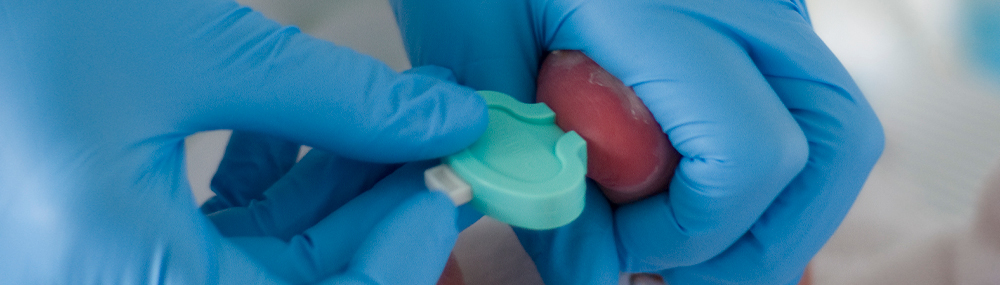
Links to websites of groups that study or provide information about newborn screening.
- Baby’s First Test and Baby’s First Test en Español are the public face of the Clearinghouse of Newborn Screening Information, which was mandated by the Newborn Screening Saves Lives Act of 2008. The sites offer information for the public and serve as a repository of the latest news and statistics related to newborn screening.
- The Centers for Disease Control and Prevention offers information on newborn screening and facts about hearing loss in children.
- The Genetics Home Reference guide to newborn screening is a resource of the National Library of Medicine. It provides information and links to many other resources.
- The NewSTEPs maintains a comprehensive resource page for parents and families.
Please note: Links to organizations and information included on this page do not indicate endorsement from NICHD, NIH, or HHS.
- NICHD Resources
- Newborn and Population Screening and Diagnosis program of the Intellectual and Developmental Disabilities Branch (IDDB) is responsible for the Hunter Kelly Newborn Screening Research Program.
- The NICHD Section on Molecular Dysmorphology is conducting studies related to newborn screening for Niemann-Pick type C, a childhood neurodegenerative disorder that results in ataxia and dementia.
- The NICHD Section on Translational Neuroscience studies human disorders of copper transport, such as Menkes disease and occipital horn syndrome, and newborn screening and treatment for these disorders.
- National Newborn Screening and Genetics Resource Center provides an up-to-date status report on newborn screening in the United States. The Center also maintains a page of resources for professionals. Among them is a fact sheet from the American College of Medical Genetics and Genomics on actions a health professional should take in following an infant who has tested positive, and an assortment of recent research publications on newborn screening. Other categories include general resources, newborn screening–specific links, and links to sites on genetics and congenital anomalies.
- The Health Resources and Services Administration supports the Advisory Committee on Heritable Disorders in Newborns and Children (ACHDNC) and Baby's First Test .
- The Secretary's Advisory Committee on Heritable Disorders in Newborns and Children 2013 Annual Report to Congress (PDF 678 KB) offers an array of information about newborn screening.
- Baby's First Test for health professionals includes information and links to other resources categorized for prenatal providers and pediatric providers, as well as information on the storage and usage of dried blood spots.
- The Newborn Screening Quality Assurance Program is operated by the Centers for Disease Control and Prevention (CDC) Newborn Screening and Molecular Biology Branch, Division of Laboratory Sciences. The Newborn Screening Quality Assurance Program aims to maintain and enhance the quality of newborn test results at state public health laboratories. The program publishes quarterly reports to allow laboratories to benchmark practices against their peers.
- Association of Public Health Laboratories collaborates with CDC to ensure the proficiency and quality of newborn screening laboratories.
- The Center for Translational Therapeutics (part of the National Center for Advancing Translational Sciences) administers a program called Therapeutics for Rare and Neglected Diseases. The program’s main focus is to encourage and speed the discovery and development of drugs, especially therapeutics for rare diseases.
- The American College of Medical Genetics publication Newborn Screening: Toward a Uniform Screening Panel and System contains a full description of the process by which the conditions contained in the Recommended Uniform Screening Panel (RUSP) were selected and a set of procedures developed for adding new conditions.
Please note: Links to organizations and information included on this page do not indicate endorsement from NICHD, NIH, or HHS.
 BACK TO TOP