
Newborn screening programs across the United States currently screen 4 million infants each year. This public health program detects treatable disorders in newborns, allowing treatment to begin often before symptoms or permanent problems occur. Newborn screening not only saves lives but can also improve the health and quality of life for children and their families.
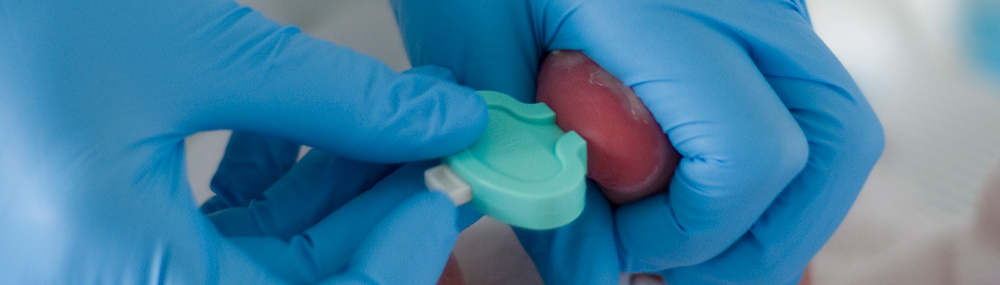
Within the first 24 to 48 hours after birth, babies undergo a simple heel stick and a few drops of blood are collected on a special paper card. Providers test those dried blood spots for a variety of different congenital disorders, or conditions that are present when the baby is born. Newborns are also screened for hearing disorders and certain serious heart problems using methods other than dried blood spots.
NICHD has been at the forefront of research related to newborn screening since the Institute's early days, with notable success. Visit the Brief History of Newborn Screening section for more information.
NICHD research on newborn screening aims to:
- Improve existing screening techniques and technologies or develop new ones.
- Expand the number of conditions for which screening tests are available.
- Develop new treatments and disease-management strategies for conditions that can be detected through newborn screening, but for which treatments are not yet available.
 BACK TO TOP